バーコードを読み取る際にデータ精度を確保
チェックサム検証を採用することで、スキャン操作中にエラーを検出するバーコードデータの信頼性を検証可能
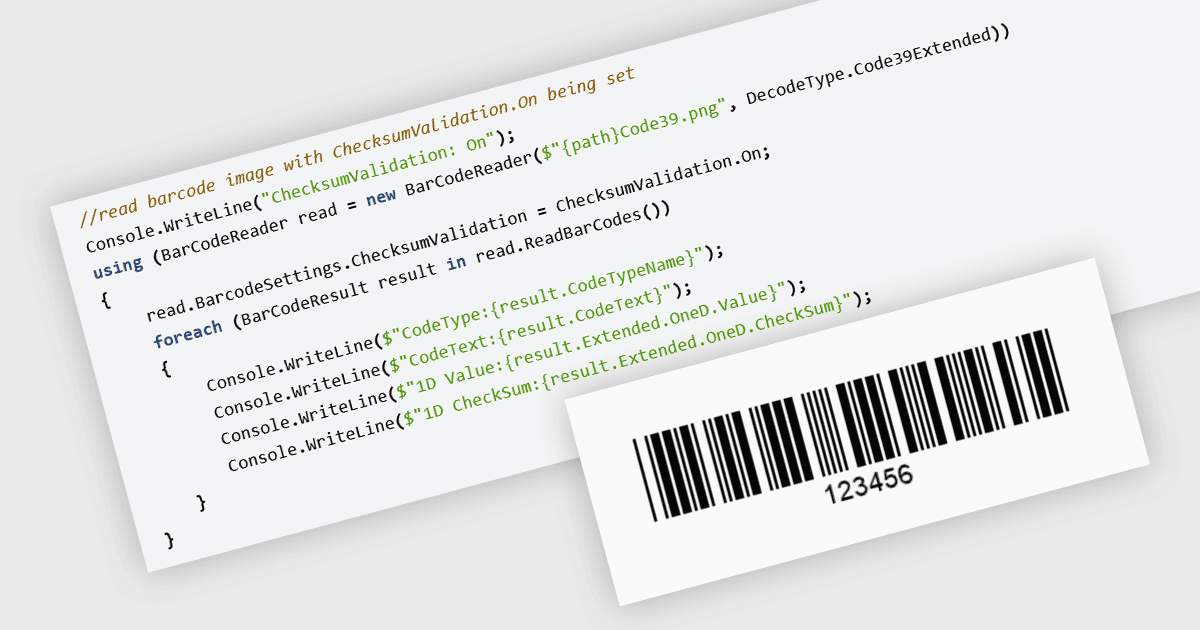
チェックサムは、バーコード文字列の末尾に追加される単一の数字または文字で、エンコードされた情報の正確さを確認するために使用されます。バーコードデータに対して数学的な計算式を適用して算出され、データ入力時、スキャン時、送信時に発生しうる誤りを検出するために用いられます。スキャン中にチェックサムを再計算して照合することで、システムはバーコードが正確に読み取られたかどうかを特定でき、データの完全性と信頼性が向上します。算出されたチェックサムがバーコードにエンコードされているものと一致しない場合、スキャナーは誤りを検出してフラグを立てることができます。このエラー検出メカニズムは、誤った製品識別や在庫の不一致といった潜在的な問題を防ぐのに役立ちます。チェックサムを使用することで、特に小売、物流、在庫管理などの高頻度スキャン環境において、業務の効率と精度が高まります。
いくつかの .NET バーコードコンポーネントにはチェックサムサポートが含まれています。例えば:
- C1BarCode(MESCIUS の ComponentOne Studio WinForms の一部)は、バーコードを読み取る際にチェックサムを使用することで、WinForms アプリケーションに対する正確なデータ検証を保証します。
- Aspose.BarCode for .NETは、包括的なチェックサムサポートによって、さまざまなバーコード標準やシンボロジーにわたるデータ完全性を確保しつつ、バーコード認識を提供します。
- IronBarcode for .NET(Iron Software による)は、高度なチェックサムオプションを備えたバーコード読み取りを可能にし、多様なバーコード形式に対して高い精度と信頼性を提供します。
- Neodynamic Barcode Reader SDK for .NETは、チェックサムの検証に対応したバーコード読み取りをサポートし、さまざまなシンボロジーからのデータを正確に解釈することを可能にします。
チェックサムサポート付きの .NET バーコードコンポーネント をぜひご覧ください。
適切なソフトウェアライセンスの見つけ方、アップグレード、更新についてお困りですか? Call, Email, or Live Chat で専門家にご相談ください。