by Planatech Solutions - 製品のタイプ: アドイン / アプリケーション / Wizard
この商品については、日本語の説明書きはございません。
Create Excel add-ins using C/C++. XLL+ is a toolkit to aid C/C++ programmers in the construction of Excel add-in libraries. XLL+ contains tools and C++ class libraries that make it very easy and safe to produce high-performance Excel add-ins. The XLL+ class library wraps the Microsoft Excel SDK with simple, intuitive C++ classes, and the Wizards create all the code for you. The user needs very little knowledge of Excel or the SDK. Add-ins produced with XLL+ contain no Visual Basic code; they are authored entirely in C and C++.
一般向け価格については下記に表示されています。お客様用の割引価格をご覧になるには、ログインしてください。
| カートに追加 | ¥ 186,795 (税込) | 1 Developer License | ダウンロード (71.1 MB) | |
| カートに追加 | ¥ 130,620 (税込) | 1 Developer License Upgrade from XLL Plus V4.x - V5.x | 要確認 | ダウンロード (71.1 MB) |
すべてのご注文にて弊社標準の 契約条件および返品条件の内容が適用されます。
一般向け価格については上記に表示されています。お客様用の割引価格をご覧になるには、ログインしてください。
What’s new in XLL+ V6.0?
Excel 2007 Support - XLL+ 6.0 supports the new features of Excel 2007, including:
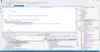
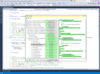
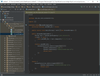
XLL Add-ins window - The XLL Add-ins window is a ToolWindow that lives inside Visual Studio, and lets you directly view and edit all of your add-in functions. You can use the Add-ins window to navigate around your source code, and you can use it with the Visual Studio Properties window to make changes directly to your add-in functions without needing to pop up the XLL+ Function Wizard. You can select multiple functions, and make changes to them all at the same time.
Extensibility - XLL+ 6.0 offers a variety of new extensibility features to make the code generated by the XLL+ tools fit ever more closely with your existing code-base.
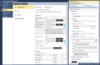
Extended types - XLL+ has always been able to transform Excel inputs to standard C and C++ types, such as double, int, std::string etc.With XLL+ 6.0, Planatech have introduced extended types, which let you specify your own value types, such as date classes, currency codes or enumerated values, and have them appear in the Function Wizard along with the standard built-in types. The Function Wizard generates all the code necessary to transform the Excel inputs to the extended type, as well as validating the input and generating appropriate error messages if input validation fails.
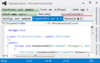
Function extensions - With XLL+ 6, you can author your own function extensions, which will be inserted into the generated code for a function by the XLL+ Function Wizard whenever you select them.
Typical uses of function extensions include:
Container classes - Earlier versions of XLL+ offered limited container support. 1-dimensional inputs were placed into std::vector, and 2-dimensional inputs were delivered to ple::imtx matrix classes.With XLL+ version 6, you can specify the container type for any or all of your vector and matrix inputs. So if you are writing XLL add-ins which call libraries of existing functions, you can deliver the Excel inputs directly into the container type expected by the libraries.
Object handles - With XLL+ 6, you can return objects to Excel, and represent them as handles, without any coding. Handles can be passed as arguments to add-in functions, and the XLL+ Function Wizard will generate code to convert each handle to the object it represents.
Asynchronous functions - If a function takes a very long time to complete, Excel is locked and unusable in the meantime. It is sometimes useful to run the function asynchronously, in a separate thread, so that Excel remains available while the function completes. While the calculation is continuing, the target cell will display “#WAIT!”, and when it is complete, the result will automatically be updated to display the result. In the past, this kind of functionality took a lot of effort to create, and incurred a high maintenance cost because of the complexity of the code. With XLL+ 6, the XLL+ Function Wizard lets you create an asynchronous version of a function with no coding.
Languages other than English - Error messages returned by the XLL+ run-time can now be delivered in languages other than English. For more information on this and other language improvements, see Languages other than English in the User Guide.
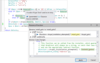
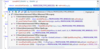
Formula Wizard Preview - The new Formula Wizard Preview lets you see exactly how your function will look in the Excel Formula Wizard. You don't need to start up Excel to see if your names and descriptions will fit in the Wizard.
Favorites - You can create a repository of "Favorite arguments" so that standard arguments to functions can be easily reused in new add-in functions. You can share the repository between team members so that all functions have standardized names, descriptions and signatures.
Integrated CHM Help - The new Help Generator builds full-featured compiled help files for your add-ins, and lets you add your own HTML content that will be inserted into the compiled help. The help topics will automatically be available from the Excel Formula Wizard, when the user clicks on "Help for this function".
New features in V5.0:
New features in V4.3.1:
What's New in V4.2
About XLL+
XLL+ is a toolkit to aid C/C++ programmers in the construction of Excel add-in libraries. If you write add-ins for Excel in C++, then you should be using XLL+. The toolkit helps you with all aspects of creating and maintaining an Excel add-in.
Why use it?
Many programmers who write add-in functions for Excel prefer to do so completely in C or C++ rather than in Visual Basic, for any number of good reasons, including speed, stability and skills. The Microsoft Excel SDK is the only means of doing this without writing Visual Basic code.
XLL+ provides a set of development tools that let the programmer instantly make use of the Excel SDK. The XLL+ toolkit hides the complexity of the SDK environment and allows programmers and designers to concentrate on their core skills, whether these be in financial modeling, in communications, in engineering or elsewhere.
The XLL+ AppWizard generates a DevStudio project containing all the source code for the framework of an XLL add-in. All the programmer needs to do is write the add-in functions themselves.
The XLL+ Function Wizard generates code to register add-in functions with Excel correctly, and to translate data from Excel data structures into standard variables and STL containers.
A class library wraps the Microsoft Excel SDK with simple, intuitive C++ classes. These let you pass data back and forth without needing to learn about the SDK data structures. They also invisibly manage all the memory issues associated with sharing data with Excel.
Users of XLL+ can produce a functioning Excel add-in library in seconds, and start to add useful functions in minutes.
Features:
AppWizard
The AppWizard builds a complete project under Microsoft Developer Studio. The user can decide whether to include various optional features, such as MFC (Microsoft Foundation Classes) integration and version information. The project is immediately ready to compile, link and run. All source files contain helpful comments and are ClassWizard compatible.
All functions required by Excel are added by the wizard. Build the new project and it will immediately be recognized by Excel as an add-in. The user can start writing add-in functions right away.
Function Wizard
The Function Wizard is a Developer Studio add-in, fully integrated into DevStudio. You can use it to specify an Excel add-in function's signature and help texts. It will write the skeletons of functions for you and make sure that they are properly registered and described to Excel. Later, if you add to or change the function's arguments, you can use the Function Wizard to keep the registration details in sync.
Arguments can be specified to be single cells, 1- or 2-dimensional arrays or free-form. You can also specify that all arguments contain certain data types, such as integers, strings etc. The Function Wizard will generate blocks of code that check all the function's inputs for consistency, and extract them into useful variables, such as STL collections.
The Function Wizard supports a full round-trip. If you change the signature of a function, only the wizard-generated code will be changed. Any code you have added to the skeleton yourself will be unaffected.
If your function contains more than 30 arguments, and is therefore too complex for Excel, you can use the Function Wizard to allow individual arguments to be grouped into arrays, and to generate code to split them up again at run-time.
On-line help is available from the Function Wizard, and several chapters of the User Guide are devoted to learning about its effective use.
Class Library
The class library contains a set of C++ objects which hide the complexity of Excel's data interface. In particular, the classes manage all memory issues. A set of virtual functions is provided so that the programmer can write event handlers for the opening, closing or registration of the add-in library.
MFC Support
Libraries can be built using the MFC build, so that they will be fully integrated with the Microsoft Foundation Classes, which makes it easy to use MFC windows and other classes from within your add-in.
COM Integration
You can implement virtual functions to trap most Excel application events, such as files opening and closing, user input, calculation etc. You don't need to write any COM code: the XLL+ framework handles all the work.
On-line Help
XLL+ on-line help is fully integrated into DevStudio, and appears within MSDN. As well as a full reference to all classes and functions, the on-line help also contains a User Guide and a Tutorial. There is also example code for all important methods.
Sample Code
Sample projects are provided to show you how to use all the features of Excel and XLL+. Walkthroughs take you quickly through the standard features of Excel add-ins. There are also smaller sample functions to illustrate all XLL+ methods and classes.
開発元/発売元
主要なカテゴリー
関連製品
関連のカテゴリー