






公式サプライヤー
公式および認定ディストリビューターとして200社以上の開発元から正規ライセンスを直接ご提供いたします。
当社のすべてのブランドをご覧ください。
ABP Platform is a comprehensive framework designed to accelerate the development of enterprise software solutions by offering an opinionated architecture built on best practices for .NET and ASP.NET Core. It equips developers with the essential infrastructure, production-ready startup templates, pre-built application modules, and modern UI themes needed to build robust, scalable, and maintainable applications. With powerful tooling, detailed guides, and extensive documentation, ABP Platform improvs implementation, reduces repetitive tasks, and ensures consistency across projects. Ideal for organizations seeking to enhance productivity and maintain high-quality standards, it enables teams to focus on delivering business value while the platform handles architectural complexity and automation.
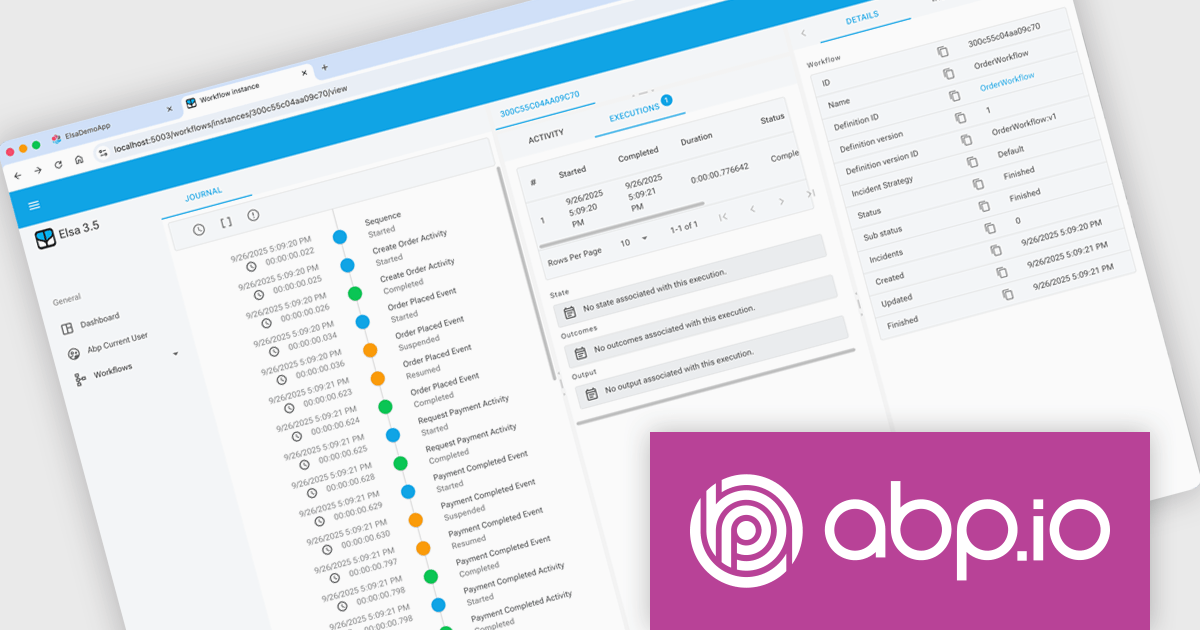
The ABP Platform 10.0 update introduces the Elsa Workflow module, giving developers a fully integrated way to design and execute visual, event-driven processes within both monolithic and microservice architectures. With built-in support for Elsa Studio, developers can model and manage behavior through a hybrid UI while relying on ABP to handle execution, state management, and service interactions, resulting in a more consistent and maintainable approach to orchestrating application processes.
To see a full list of what's new in version 10.0.0, see our release notes.
The ABP Platform is available as a Team, Business or Enterprise license, which entitles developers to use the platform's Pro features and provides software updates and technical support for 1 year. See our ABP Platform licensing page for full details.
For more information, visit our ABP publisher page.
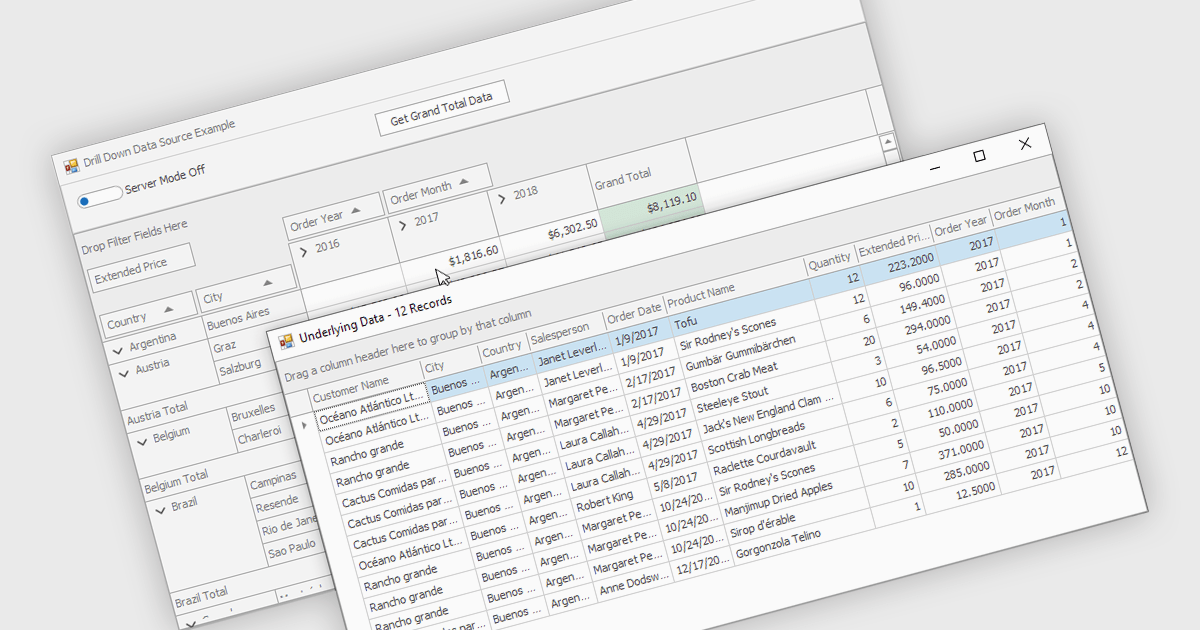
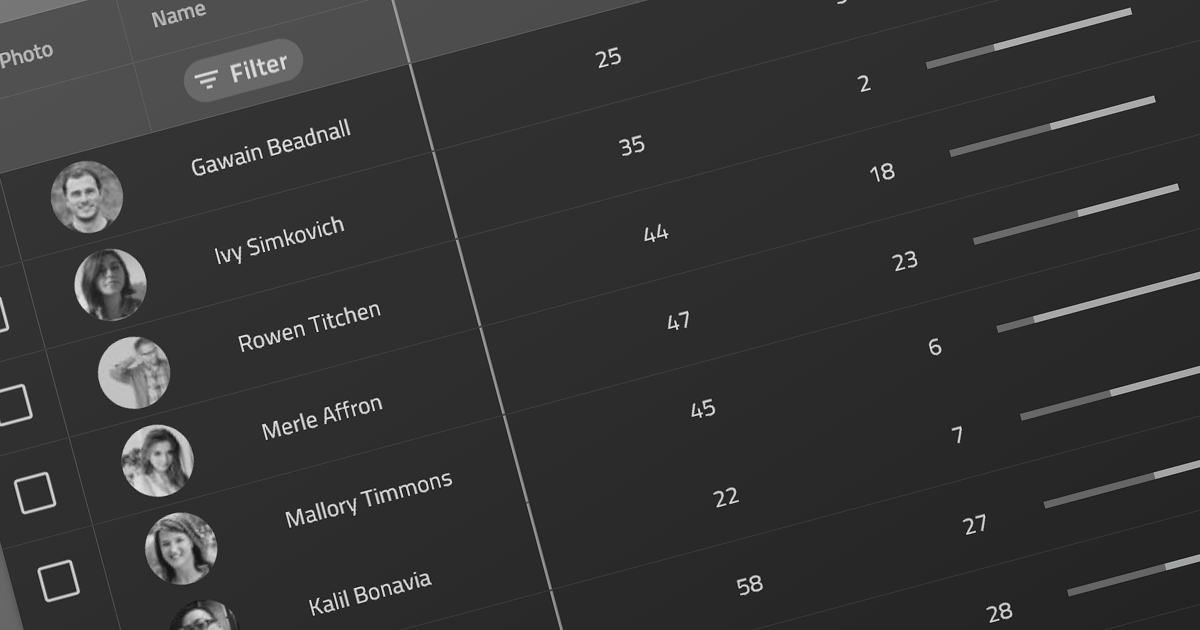
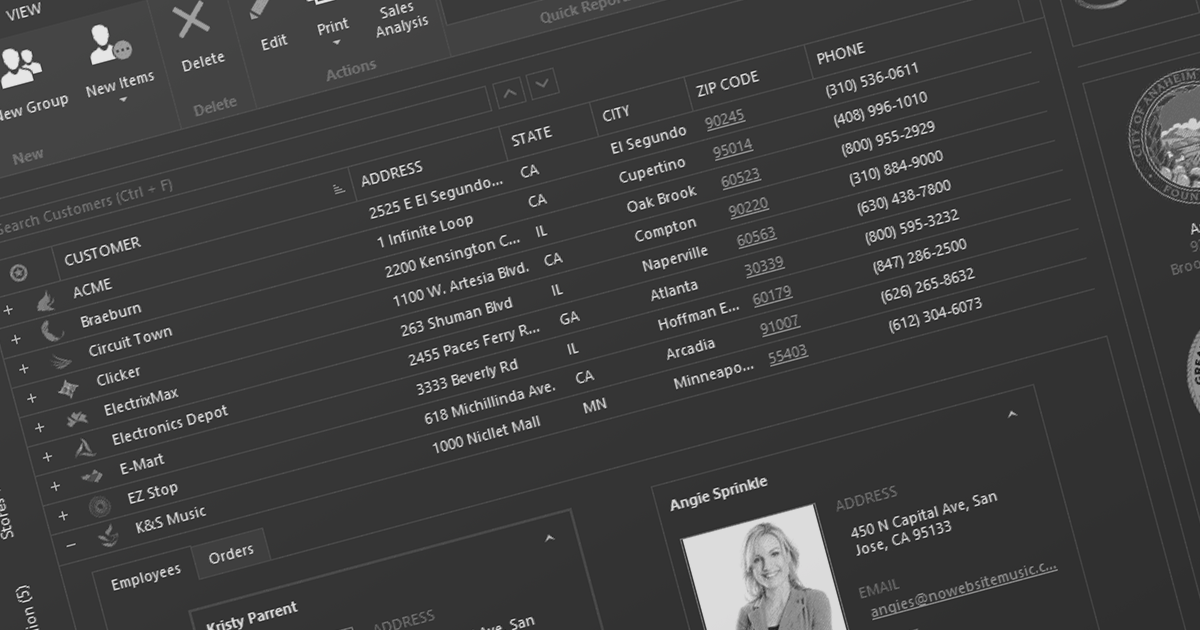
Drill-down capability within a grid control enables users to move from summary data to increasingly detailed records within the same interface, creating a smooth and focused exploration experience. It improves productivity by reducing screen changes and extra queries, helps users spot patterns and exceptions more quickly, and keeps complex information clearly organized. Typical use cases include reviewing sales by region, then by city and customer, analyzing financial summaries that open into individual transactions, or exploring product inventories from category to specific item.
Several .NET WinForms grid controls offer drill-down capability including:
For an in-depth analysis of features and price, visit our .NET WinForms grid controls comparison.
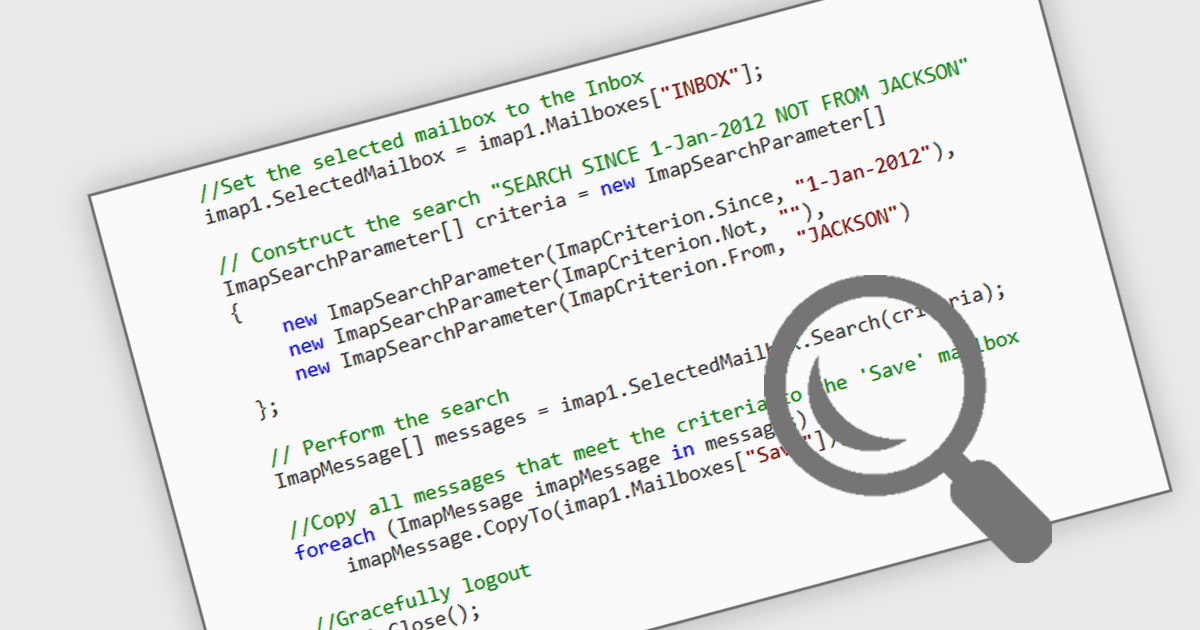
Searching and filtering mail in a Comms & Messaging .NET Core component refers to the ability to locate and narrow down email messages based on specific criteria such as sender, subject, date, or content. This feature is implemented through programmatic access to email metadata and message bodies, enabling developers to build custom filters or queries directly into their applications. It improves efficiency by allowing faster access to relevant messages and simplifies tasks such as audit logging, automated processing, or user-driven searches within large volumes of communication data.
Several Comms & Messaging components for .NET Core offer support for searching and filtering mail including:
For an in-depth analysis of features and price, visit our comparison of .NET Core Comms & Messaging.
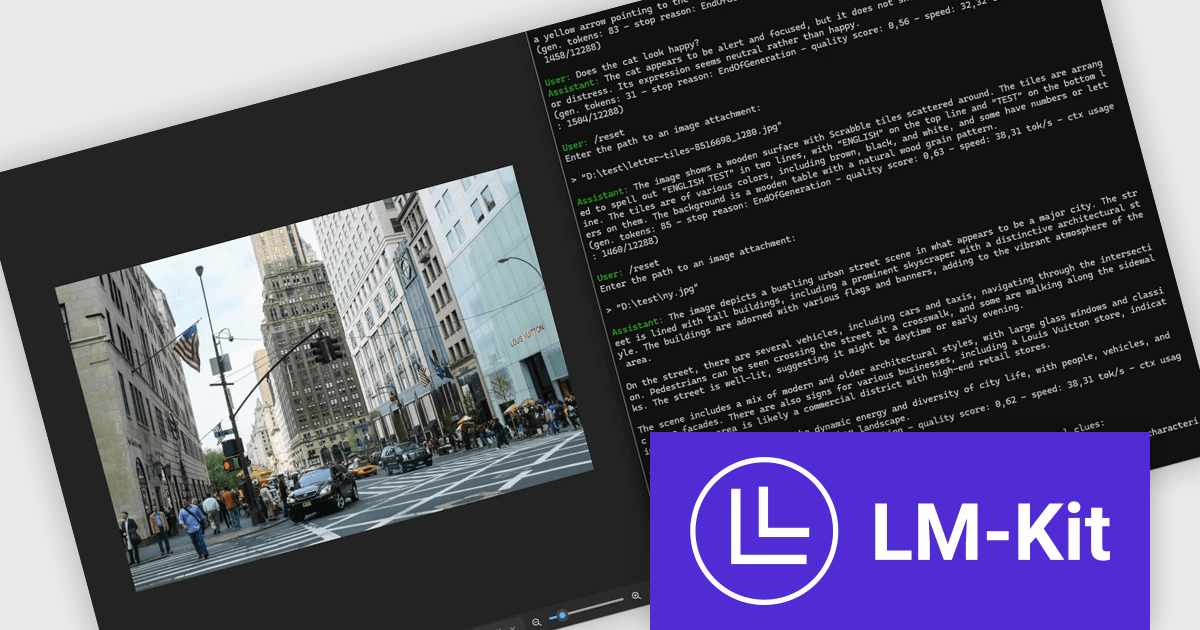
LM-Kit.NET is a cross-platform software development kit (SDK) designed for .NET applications, enabling on-device execution of large and small language models without relying on external cloud services. It supports a broad range of natural language processing tasks, including text generation, translation, summarization, and entity recognition, executed locally on CPU or GPU, with compatibility across Windows, Linux, and macOS. The SDK provides native integration through a NuGet package, allowing developers to embed AI capabilities directly into desktop, server, or edge applications while maintaining full control over data, performance, and compliance requirements. It supports multiple model architectures and inference backends, giving developers flexibility to tailor performance and resource usage to their specific environments.
The LM-Kit.NET 2025.11.2 update adds a native assembly targeting .NET 10, giving developers improved runtime performance, stronger compatibility with modern .NET environments, and direct access to the latest framework optimizations. This enhancement supports smoother project upgrades, reduces reliance on compatibility layers, and enables more efficient, maintainable applications that align with current and future .NET development practices.
To see a full list of what's new in version 2025.11.2, see our release notes.
LM-Kit.NET is licensed per deployed commercial application per year. The license is subscription-based and must be renewed every year to continue using the Software. See our LM-Kit.NET licensing page for full details.
Learn more on our LM-Kit.NET product page.
Telerik UI for .NET MAUI is a robust suite of user interface components designed to simplify the creation of cross-platform applications using .NET Multi-platform App UI (MAUI). It offers a wide range of pre-built controls, including charts, grids, and navigation elements, enabling developers to build visually appealing, high-performance apps for Android, iOS, Windows, and macOS from a shared codebase. By ensuring a consistent user experience across platforms, it accelerates development and allows a focus on functionality, making it ideal for business applications, dashboards, and data-driven projects.
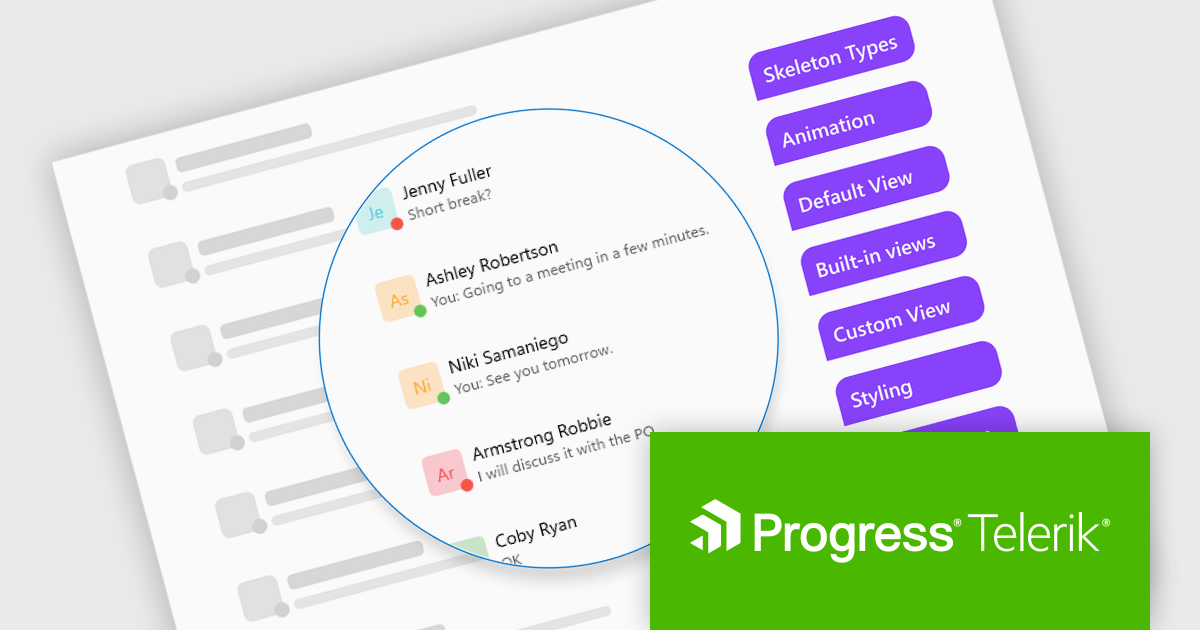
The Telerik UI for .NET MAUI 2025 Q4 update introduces the new Skeleton Component, which enables developers to present structured loading placeholders that match the layout of their final content. This improves perceived responsiveness by keeping the interface stable while data is retrieved, reducing layout shifts and allowing users to understand the expected structure of the page before it fully renders. With built-in templates for common UI patterns, the component improves implementation and helps teams deliver more consistent, polished loading experiences across their applications.
To see a full list of what's new in 2025 Q4 (v12.0.0), see our release notes.
Telerik UI for .NET MAUI is licensed per developer and has two licensing models: an annual Subscription License and a Perpetual License. The Subscription license provides access to the latest product updates, technical support, and exclusive benefits for a flat annual fee, and must be renewed to continue using the software. The Perpetual license is a one-time purchase granting access to the current released version and includes a one-year subscription for product updates and technical support. After this initial period, users can choose to renew the subscription element to continue receiving updates and support; otherwise, they may continue using the installed version available during their active subscription term but will forgo future updates and support. See our Telerik UI for .NET MAUI licensing page for full details.
Telerik UI for .NET MAUI is available individually or as part of the following products:
電話: (888) 850 9911
Fax: +1 770 250 6199


